The Hidden Role of Metadata in Programmatic Performance

Metadata is the descriptive information attached to a digital asset, such as a website, mobile app, video, or ad impression. While users never see it directly, it provides critical context about the content, audience, placement, and environment in which an ad may appear. This information helps advertising platforms better understand what a specific impression represents and how valuable it may be to advertisers.
In programmatic advertising, metadata plays a key role in communication between demand-side platforms (DSPs), supply-side platforms (SSPs), and ad exchanges. It enriches bid requests with signals that support targeting, brand safety, relevance, and performance optimization.
Real-time bidding auctions highlight its importance, as buyers make decisions within milliseconds. The quality and completeness of metadata can directly influence how an impression is evaluated, priced, and ultimately monetized.
What Types of Metadata Exist in RTB?
RTB bid requests contain a wide range of metadata that helps advertising platforms evaluate available inventory. One of the most common categories is content metadata, which includes information about the subject matter of a webpage, app, video, or article. Content categories, keywords, and contextual signals help determine whether an impression aligns with an advertiser’s targeting goals.
Additional metadata describes the supply source itself. This may include app and website details, publisher identifiers, domain information, and inventory quality signals. Ad placement metadata provides further context by indicating where an ad will appear on the screen, its format, size, and visibility potential.
Technical metadata is equally important. Platforms use device type, operating system, browser, connection type, and other specifications to understand the environment in which they deliver an impression.
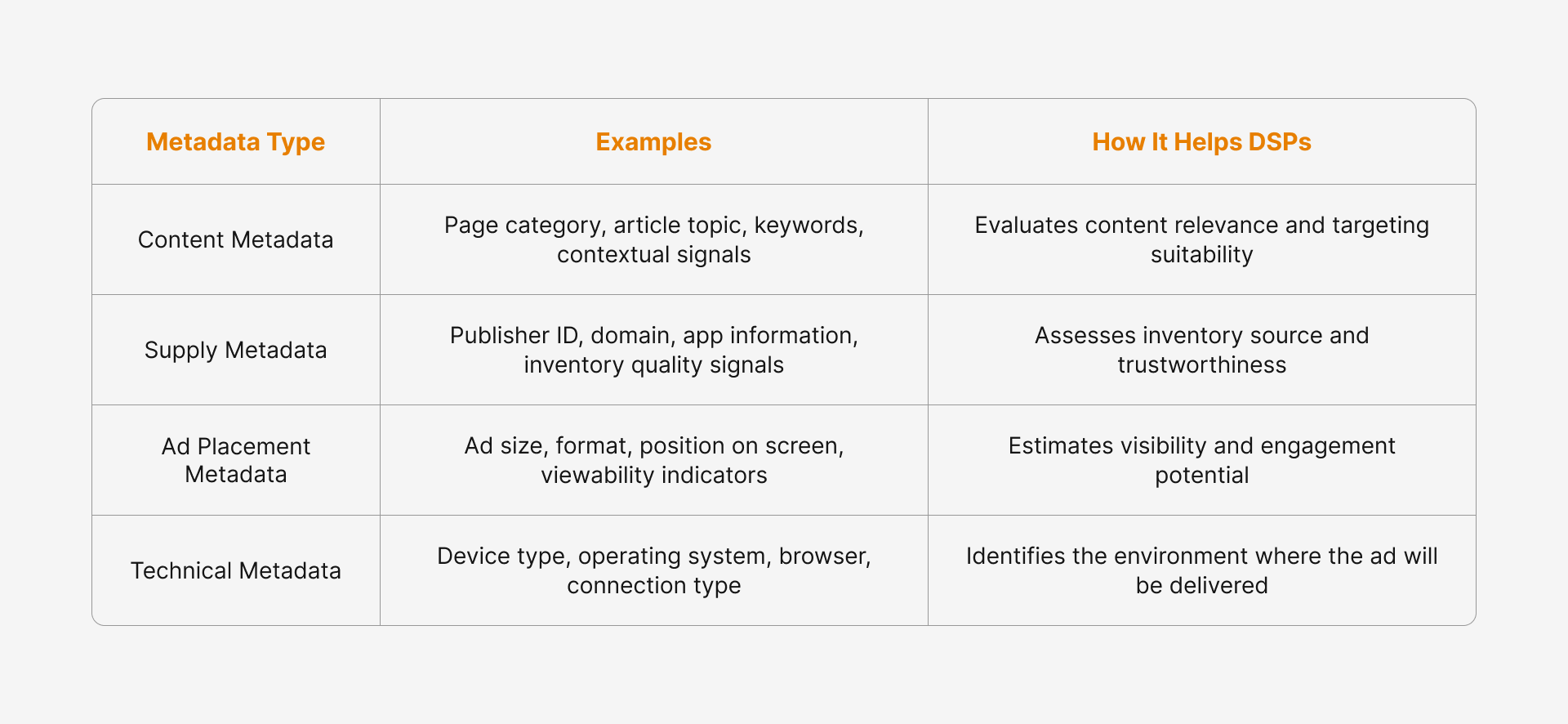
Together, these metadata layers provide context that goes far beyond basic user signals. They enable DSPs and other programmatic platforms to interpret impression value more accurately and make better bidding decisions in real time.
How DSPs Use Metadata to Make Bidding Decisions
When a bid request reaches a DSP, the platform must evaluate the opportunity and decide within milliseconds. While user data remains an important signal, modern bidding strategies rely heavily on metadata to understand the context in which an ad may appear.
The DSP analyzes multiple metadata elements, including the webpage category, the app theme, the ad unit’s position and format, the publisher, and the traffic source’s reputation. These signals help determine whether the available impression matches the campaign’s targeting requirements, brand safety standards, and performance objectives.
Based on this evaluation, the DSP decides whether to participate in the auction and how much the impression is worth. In essence, metadata helps answer a critical question before every bid is placed: Is this environment suitable for displaying this ad? The more complete and accurate the metadata, the more confident and efficient the bidding decision becomes.
Why Poor Metadata Hurts Performance
Metadata is only valuable when it is accurate, complete, and up to date. When key information is missing or incorrect, DSPs have less confidence in their ability to evaluate an impression and predict its potential performance. This uncertainty can directly affect bidding behavior and inventory demand.
Common issues include incorrectly assigned content categories, missing ad placement details, outdated app or website descriptions, and overly broad classifications that provide little meaningful context. Without reliable metadata, platforms may struggle to determine whether an impression meets campaign requirements or aligns with brand safety and targeting criteria.
As a result, DSPs may lower their bids, avoid participating in auctions, or exclude the inventory altogether. In some cases, even premium publishers with high-quality audiences can experience reduced demand. The problem is not the inventory itself, but the inability of buyers to accurately assess its value. Poor metadata creates uncertainty, and in programmatic advertising, uncertainty often leads to lower monetization opportunities.
Metadata in a Privacy-First Advertising Landscape
The importance of metadata is increasing as digital advertising adapts to a privacy-first environment. With the gradual decline of third-party cookies and the reduced availability of user identifiers, advertisers have fewer individual signals to rely on when evaluating ad opportunities and targeting audiences.
As a result, the industry is placing greater emphasis on contextual information. Metadata such as page categories, app descriptions, publisher details, ad placement characteristics, and content-related signals provides valuable insight into the environment where an impression appears. These elements help platforms understand relevance without depending on extensive user-level data.
For DSPs, high-quality metadata has become a critical source of decision-making intelligence. It enables more accurate bidding, improved brand safety, and stronger campaign performance while respecting evolving privacy standards. By providing meaningful context rather than personal information, metadata helps maintain advertising effectiveness in a landscape where privacy requirements continue to shape the future of programmatic buying.
How Publishers and Advertisers Can Improve Metadata Quality
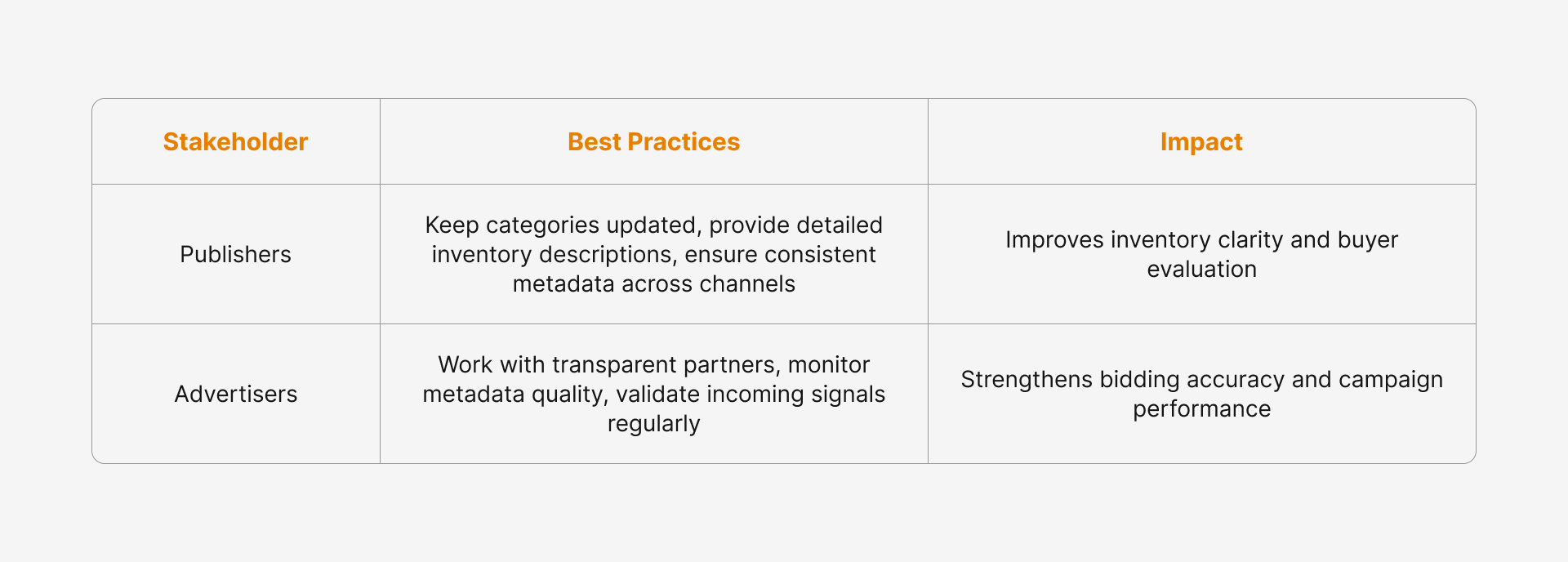
Improving metadata quality requires effort from both publishers and advertisers. Publishers should keep content categories accurate and up to date, provide detailed inventory descriptions, and maintain consistent metadata across all sales channels. Standardized and complete information helps buyers evaluate inventory more effectively.
Advertisers and DSPs should prioritize transparent supply partners, monitor metadata quality alongside campaign performance, and regularly validate incoming signals. Reliable metadata increases confidence in bidding decisions, supports stronger targeting and brand safety outcomes, and helps create a more efficient and effective programmatic advertising ecosystem.
The power of programmatic

How DSPs Manage and Distribute Campaign Budgets
15 May 2026Budget allocation in a demand-side platform refers to how an advertiser’s budget is distributed throughout the duration of a campaign. Instead of spending too quickly at the start or leaving unused funds at the end, DSPs pace spending to maintain balance over time. This process involves setting daily or hourly limits and continuously adjusting them based on campaign performance and available opportunities.

How Signal Loss Is Reshaping RTB Strategies
10 Apr 2026Signal loss is the gradual reduction of user data that advertising systems rely on. This includes cookies, device identifiers, and other tracking signals used in real-time bidding to understand who the user is and how valuable an impression might be.

Floor prices play a far greater role in programmatic performance than many advertisers assume. While brands often focus on audience targeting, frequency, and creative optimization, the minimum price set by the supply-side platform quietly shapes the entire auction environment. A higher or poorly calibrated floor can restrict bid participation, suppress win rates, and limit access to valuable impressions. Conversely, a well-aligned floor price can stimulate competiti