How DSPs Manage and Distribute Campaign Budgets

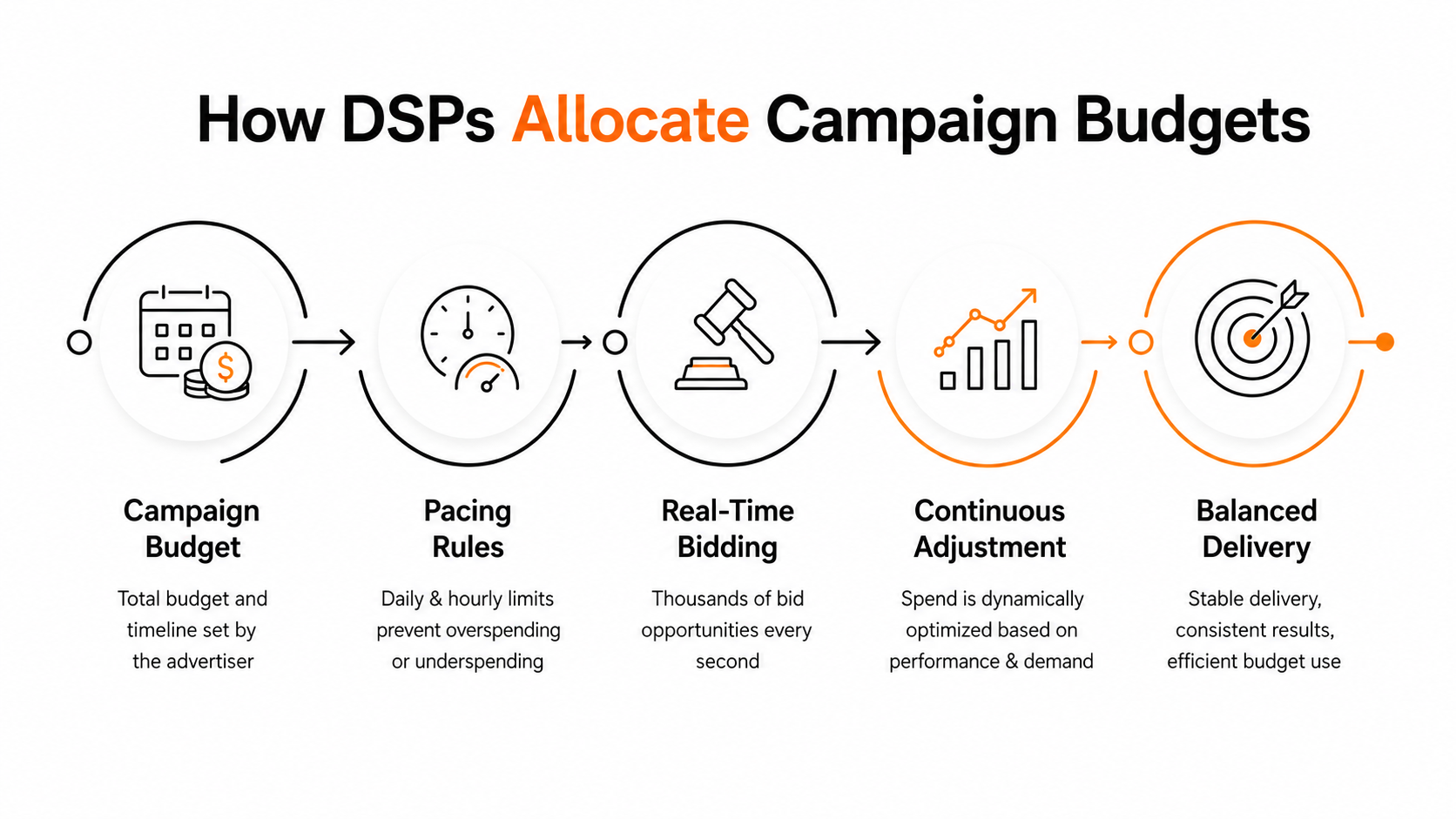
Budget allocation in a demand-side platform refers to how an advertiser’s budget is distributed throughout the duration of a campaign. Instead of spending too quickly at the start or leaving unused funds at the end, DSPs pace spending to maintain balance over time. This process involves setting daily or hourly limits and continuously adjusting them based on campaign performance and available opportunities.
In real-time bidding environments, where thousands of impressions become available every second, effective budget allocation is essential. Without proper pacing, a campaign can exhaust its budget early in the day or fail to compete in valuable auctions later on.
A well-managed allocation strategy ensures stable ad delivery, consistent performance, and efficient use of resources. By aligning spend with campaign goals and market conditions, DSPs help advertisers reach their target audiences while maximizing the overall impact of their investment.
Why Budget Pacing Matters in RTB Campaigns
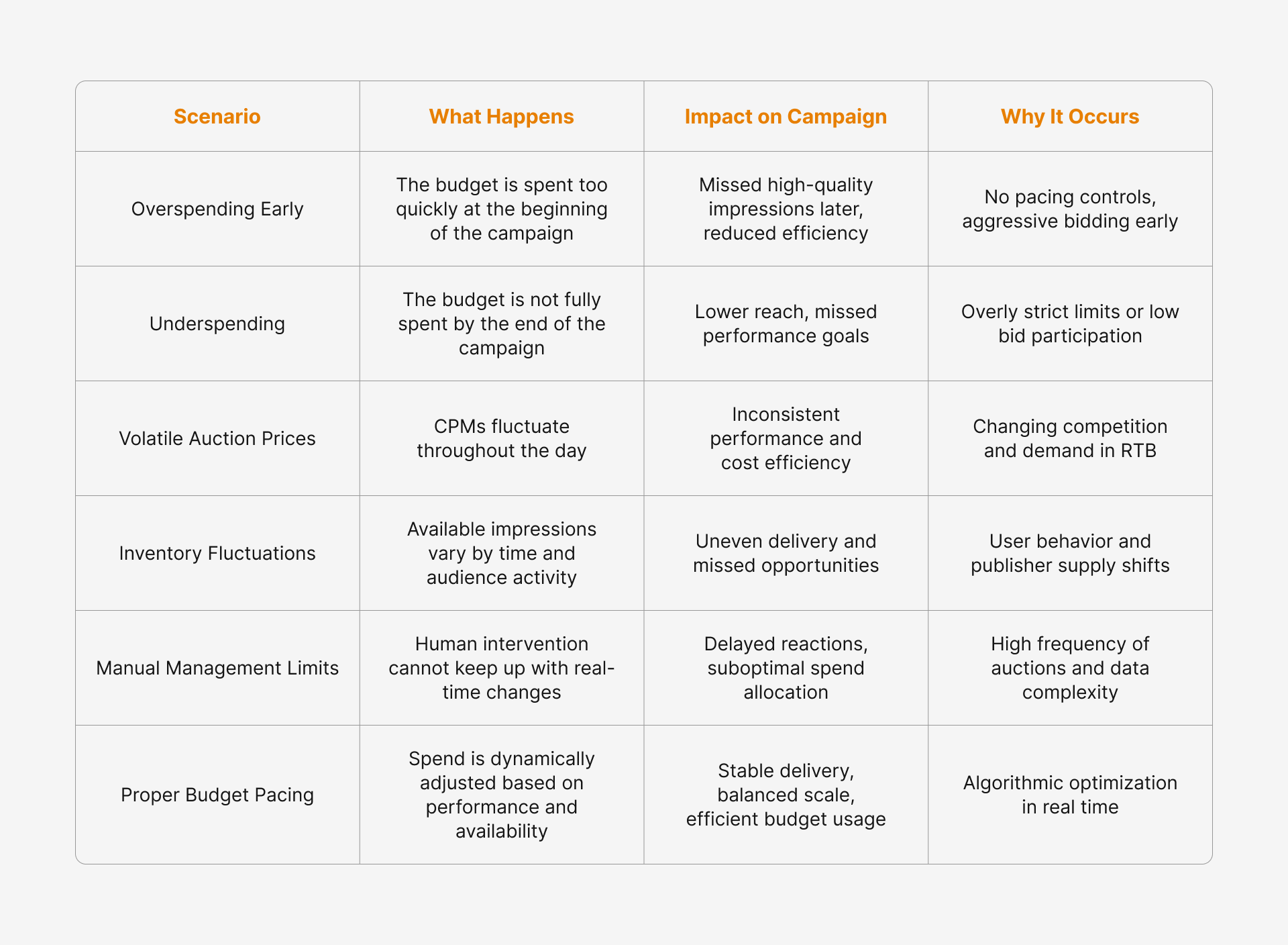
Budget pacing plays a critical role in real-time bidding campaigns because it directly impacts how effectively a budget is used over time. Without proper pacing, campaigns risk spending too quickly during periods of high early activity. This can lead to missed opportunities later in the day or toward the end of the campaign, when more valuable impressions may become available. On the other hand, overly conservative pacing can result in underspending, limiting reach, and reducing overall campaign impact.
The complexity of RTB environments makes this challenge even more significant. Auction dynamics change constantly, with fluctuations in inventory supply, user activity, and competition levels. Prices can vary from one moment to the next, making it impossible to rely on static rules or manual adjustments. What appears efficient at one hour may become suboptimal shortly after.
Budget pacing helps navigate this uncertainty by continuously adjusting spend in response to real-time conditions. It ensures that budgets are distributed evenly while still allowing flexibility to capture high-value opportunities. As a result, advertisers can achieve a balance between scale and efficiency, maintaining consistent delivery and improving overall campaign performance.
This table examines scenarios that affect digital advertising campaign performance, detailing the challenges, consequences, and reasons. Understanding these factors is key to optimizing budgets and managing campaigns effectively.
How DSPs Control Spend in Real Time
Demand-side platforms manage campaign budgets by making continuous decisions at the impression level. In real-time bidding environments, each opportunity to show an ad is evaluated individually. DSPs determine whether to bid, how much to bid, or whether to skip the auction entirely. Algorithms drive these decisions by processing signals such as user data, context, historical performance, and current pacing status.
Bid throttling actively limits auction participation when spending exceeds the schedule or when inventory quality is low. By selectively reducing the number of bids, DSPs prevent early budget exhaustion and maintain control over delivery. At the same time, impression selection ensures that bids are focused on opportunities most likely to generate value, rather than competing in every available auction.
Real-time decisioning brings these elements together. Algorithms continuously adjust bid prices based on performance goals, market competition, and remaining budget. If high-value impressions become available, the DSP can increase bids to win them. If conditions are less favorable, it can scale back or pause participation. This dynamic control allows advertisers to balance efficiency and reach while adapting to constantly changing auction conditions.
Even vs. Performance-Based Pacing Strategies
DSPs typically rely on two core pacing strategies to manage how budgets are spent over time. Even pacing distributes the budget uniformly across the campaign duration. It sets predictable spending targets for each hour or day, helping ensure that the campaign remains active from start to finish. This approach provides stability and consistent delivery, which is especially useful for brand awareness campaigns where maintaining presence is important.
Performance-based pacing takes a different approach. Instead of spreading spending evenly, it allocates more budget to impressions and time periods that deliver stronger results. Algorithms analyze performance signals such as conversion rates, click-through rates, and audience engagement. Based on this data, the DSP increases bids or participation in more favorable outcomes and reduces spend in less effective areas. This method improves efficiency but can lead to uneven delivery if not carefully controlled.
In practice, DSPs combine both strategies. Even pacing provides a baseline that prevents overspending or underspending, while performance-based adjustments introduce flexibility to capture high-value opportunities. By blending stability with optimization, DSPs can maintain consistent delivery while maximizing the campaign’s overall impact.
What Can Disrupt Budget Pacing
Budget pacing depends on a relatively stable auction environment, but several external factors can interfere with this balance. One common disruption is sudden changes in bid floors. When publishers increase minimum prices without warning, DSPs may win fewer auctions or be forced to bid higher than planned. This can quickly distort spending patterns and reduce cost efficiency.
Inconsistent supply poses another challenge, as the volume of available impressions can vary significantly based on factors such as the time of day, user activity, or publisher behavior. When supply drops unexpectedly, campaigns may struggle to spend their allocated budget. When supply surges, there is a risk of overspending if pacing controls do not adjust quickly enough.
Loss of signals affects pacing accuracy, while data such as user identifiers, contextual information, and conversion feedback assist DSPs in evaluating opportunities. When these signals become limited or unreliable, decision-making becomes less precise. As a result, spend may be directed toward lower-quality impressions, reducing overall performance.
Spikes in competition complicate budget allocation, as increased demand from other advertisers can drive up prices and reduce win rates. This forces DSPs to adapt bidding strategies in real time, often leading to fluctuations in delivery. Maintaining stable supply paths and predictable auction conditions is essential for keeping pacing consistent and performance reliable.
How to Improve Budget Distribution for Better Results
Effective budget distribution starts with a clear understanding of campaign goals and realistic expectations. Setting an appropriate budget ensures that pacing algorithms have enough flexibility to operate efficiently without being overly constrained or forced into aggressive spending patterns.
To improve allocation and performance, consider the following practices:
- Set realistic budgets that match campaign scale and objectives
- Align KPIs with the chosen pacing strategy to avoid conflicting signals
- Prioritize high-quality inventory to improve efficiency and outcomes
- Monitor signal performance to ensure accurate decision-making
Each factor affects a DSP’s spend allocation, and aligned inputs lead to better bidding decisions and improved results. Optimized budgets boost conversion rates, minimize waste, and enable sustainable growth. By refining inputs and monitoring performance, advertisers can adapt to market changes while controlling campaign outcomes.
The power of programmatic

Metadata is the descriptive information attached to a digital asset, such as a website, mobile app, video, or ad impression. While users never see it directly, it provides critical context about the content, audience, placement, and environment in which an ad may appear. This information helps advertising platforms better understand what a specific impression represents and how valuable it may be to advertisers.

How Signal Loss Is Reshaping RTB Strategies
10 Apr 2026Signal loss is the gradual reduction of user data that advertising systems rely on. This includes cookies, device identifiers, and other tracking signals used in real-time bidding to understand who the user is and how valuable an impression might be.

Floor prices play a far greater role in programmatic performance than many advertisers assume. While brands often focus on audience targeting, frequency, and creative optimization, the minimum price set by the supply-side platform quietly shapes the entire auction environment. A higher or poorly calibrated floor can restrict bid participation, suppress win rates, and limit access to valuable impressions. Conversely, a well-aligned floor price can stimulate competiti