Deliver a consistent experience across all channels
Your customers will appreciate a seamless advertising experience
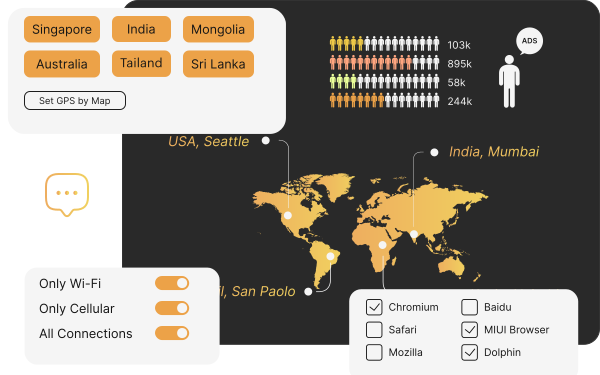
What is omnichannel
advertising?
Omnichannel advertising means integrated experience across multiple channels and touchpoints to reach customers at every stage of their journey regardless of the customer's device, platform, or channel. With DecenterAds, you can effectively launch efficient omnichannel campaigns using our convenient platform
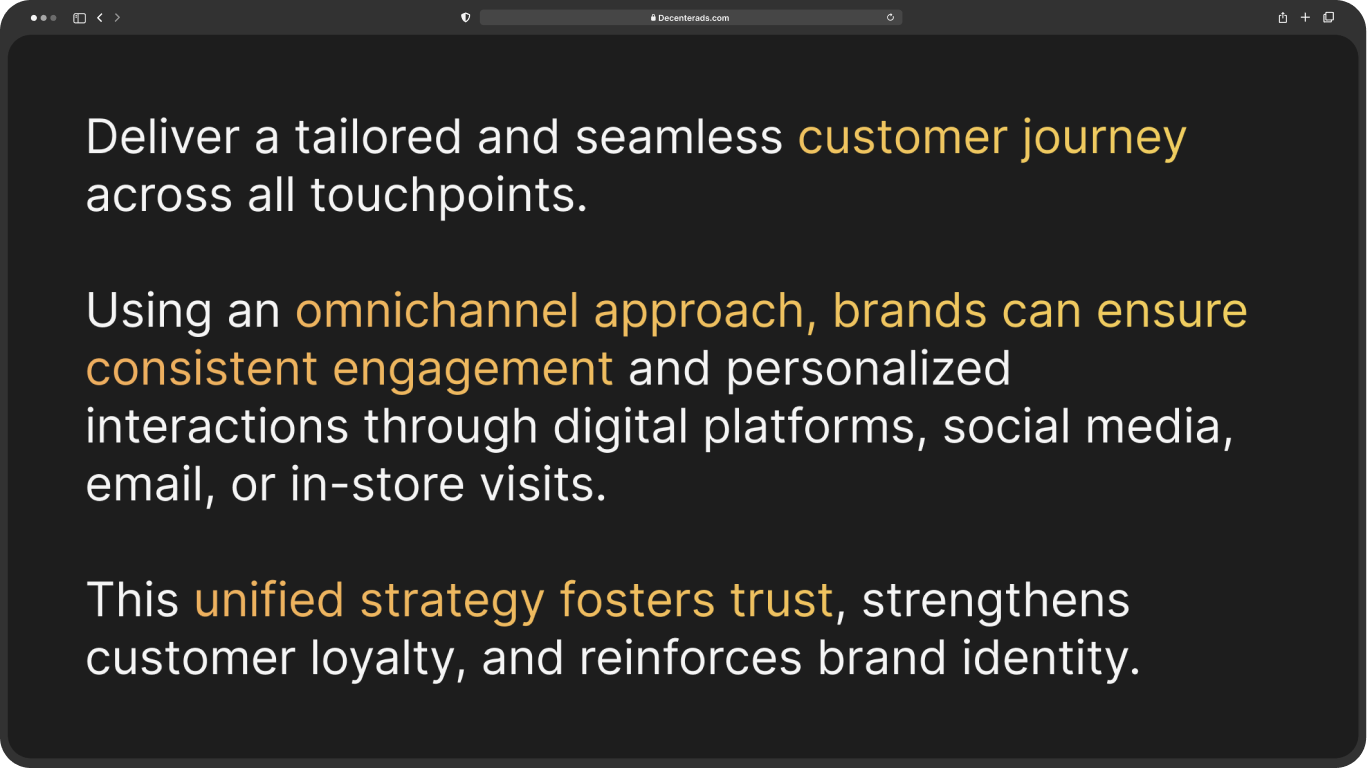
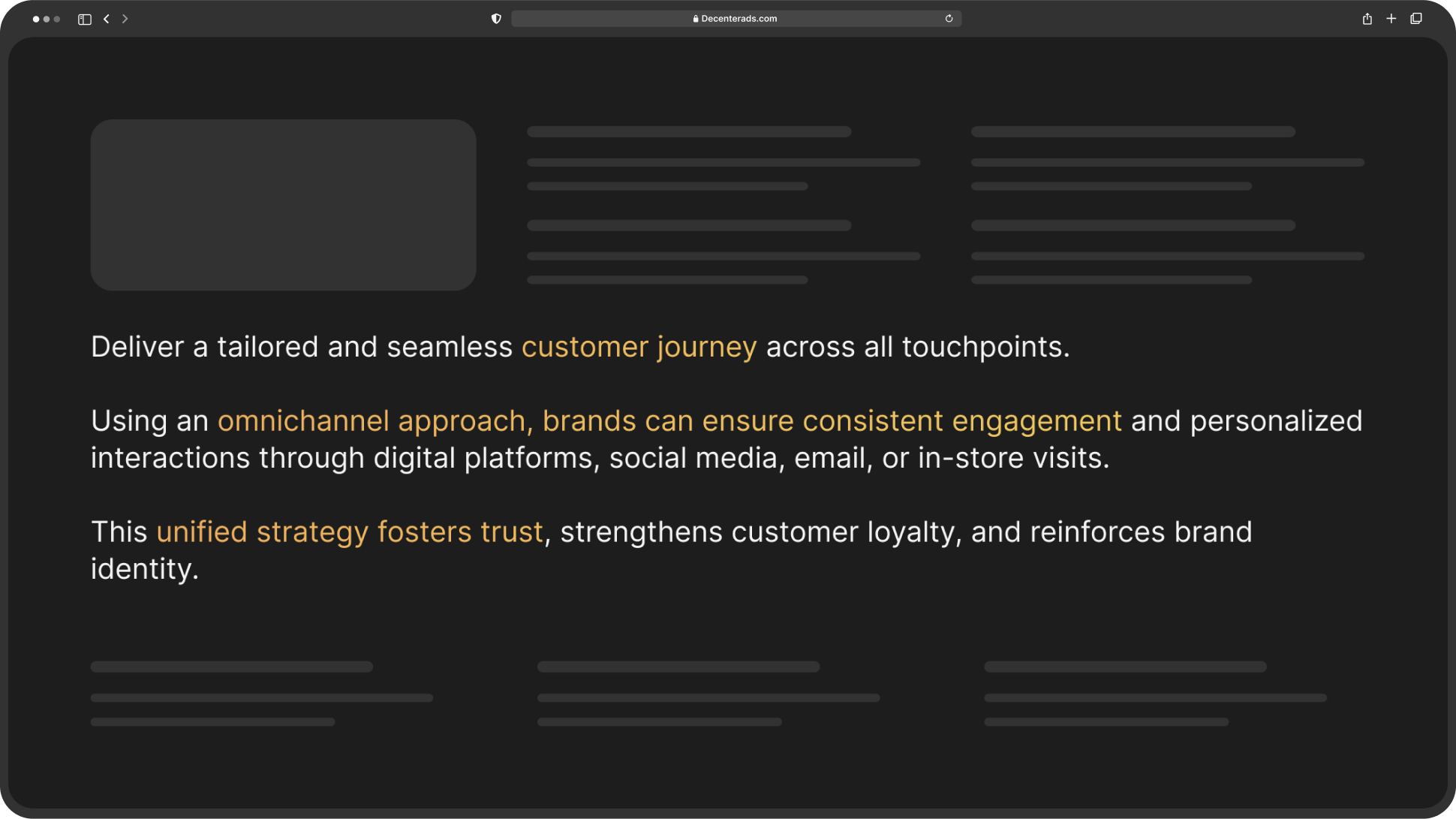
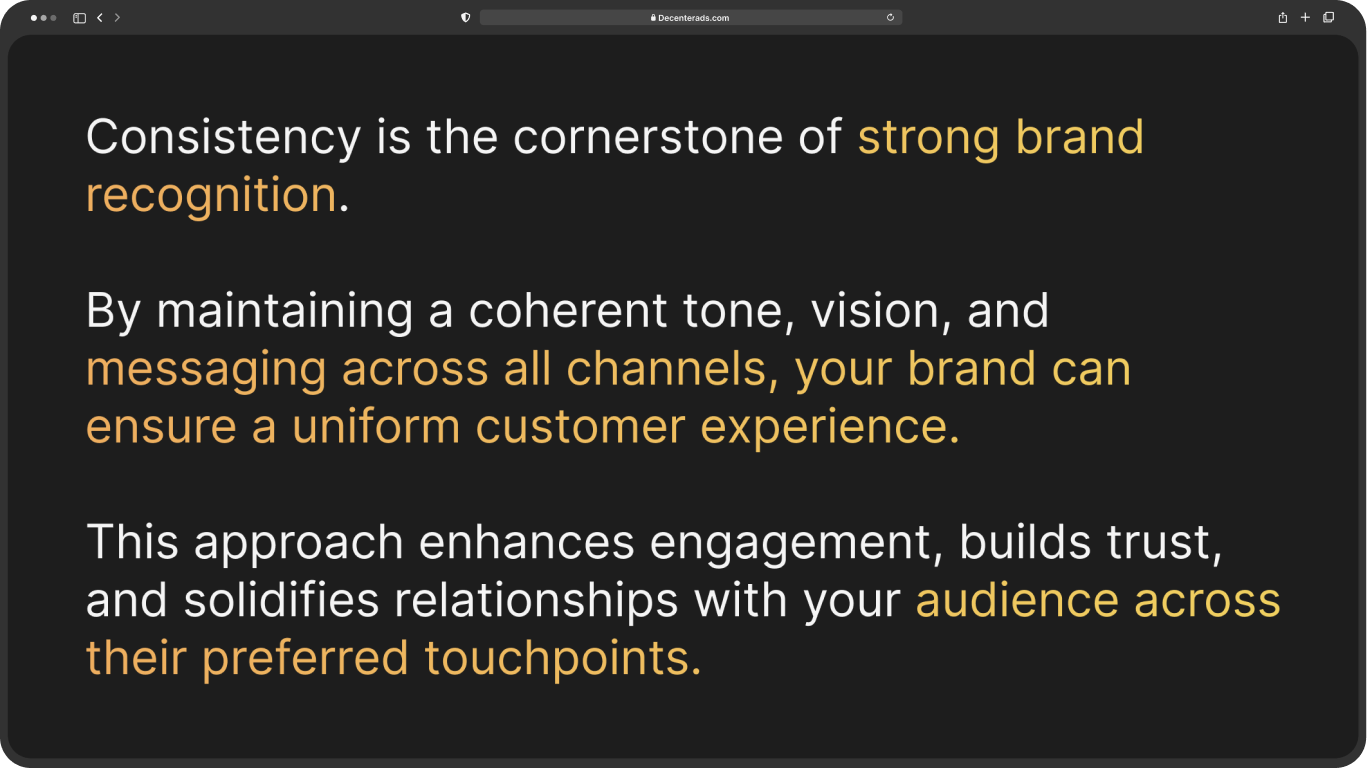
Key Components of Omnichannel Programmatic Strategy
How Unbiased Media Buying Drives Channel-Wide Optimization
Key benefits of unbiased media buying with DecenterAds
Transparent Campaign Execution
At DecenterAds, transparency is key. Advertisers gain full visibility into budget allocation and campaign performance, fostering trust and providing insights for continuous improvement and better results
Superior Ad Performance
DecenterAds uses an unbiased media buying approach to ensure superior ad performance. By prioritizing quality over channel loyalty, we drive engagement, boost conversions, and optimize every dollar spent
Flexible and Strategic Partner Selection
DecenterAds’ unbiased media buying model sources inventory from diverse partners, allowing tailored ad placements that align with campaign goals, free from constraints or conflicts, ensuring measurable success
Elevated Brand Safety Standards
At DecenterAds, brand safety is a priority. Our rigorous vetting and unbiased media buying ensure ads appear in premium, brand-safe environments, avoiding harmful placements to protect your reputation
Maximized Campaign Effectiveness
DecenterAds’ unbiased inventory selection delivers top channels and formats, ensuring relevant, quality ad placements that drive engagement, conversions, and ROI for optimal campaign success
Reach your audience wherever they are!
Ad types
Desktop
Mobile Web
Connected TV
In-app
Ad formats

Video

Native

Audio

Banner

Interstitial

Rich media
Trusted by 300+ companies









Contact us to get started
Drop us a line if you have any questions, thoughts or ideas. We will gladly talk with you!
The power of programmatic

Metadata is the descriptive information attached to a digital asset, such as a website, mobile app, video, or ad impression. While users never see it directly, it provides critical context about the content, audience, placement, and environment in which an ad may appear. This information helps advertising platforms better understand what a specific impression represents and how valuable it may be to advertisers.

How DSPs Manage and Distribute Campaign Budgets
15 May 2026Budget allocation in a demand-side platform refers to how an advertiser’s budget is distributed throughout the duration of a campaign. Instead of spending too quickly at the start or leaving unused funds at the end, DSPs pace spending to maintain balance over time. This process involves setting daily or hourly limits and continuously adjusting them based on campaign performance and available opportunities.

How Signal Loss Is Reshaping RTB Strategies
10 Apr 2026Signal loss is the gradual reduction of user data that advertising systems rely on. This includes cookies, device identifiers, and other tracking signals used in real-time bidding to understand who the user is and how valuable an impression might be.