AdTech Landscape Evolution Beyond Google

AdTech Landscape Evolution Beyond Google
Imagine an AdTech world where Google is no longer the only gatekeeper. New channels and independent platforms are giving advertisers fresh ways to reach audiences with precision and privacy. Connected TV, in-app environments, and retail media networks are unlocking unique inventory and data models outside traditional ecosystems.
As regulations tighten and technology evolves, brands gain more control over targeting, measurement, and campaign strategy. This shift is creating a more competitive, flexible, and innovative digital advertising landscape, where independence and experimentation are becoming the new standard.
The Shift in Market Power
For more than a decade, Google has played a central role in shaping the AdTech ecosystem. Its tools have influenced how advertisers target audiences, measure performance, and automate media buying. This influence remains strong and continues to guide many industry standards. Even so, Google no longer represents the entire center of gravity within digital advertising.
A noticeable shift is underway as advertisers seek broader options. New platforms, privacy regulations, and rapid advancements in artificial intelligence have encouraged companies to expand their strategies. Retail media networks, connected TV platforms, and first-party data solutions now offer fresh opportunities that are attracting a large share of advertising budgets. The market is becoming more diverse every year as research and investment fuel innovation across many channels.
Key statistics illustrate this growth:
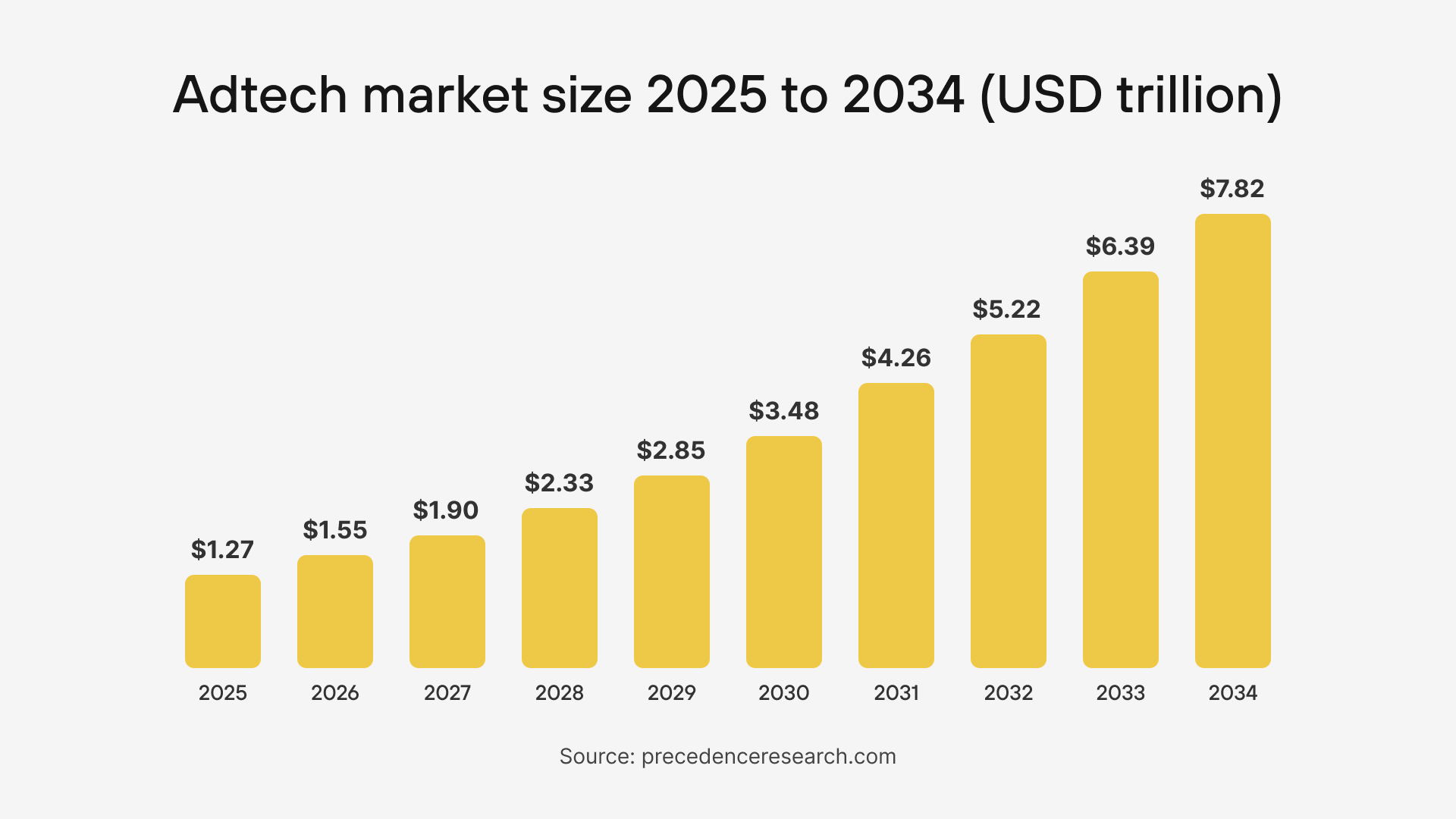
- The global AdTech market is valued at USD 1.27 trillion in 2025
- Projected market to reach USD 7.82 trillion by 2034
- CAGR of 22.35 percent for the period from 2025 to 2034
- The North America AdTech market reached USD 370 billion in 2024
The chart below illustrates how quickly the sector is scaling and the significant opportunity beyond traditional channels.
Growth of Independent AdTech
The rise of independent SSP, DSP, and Ad Exchange platforms is reshaping how advertisers distribute their budgets. Many brands are shifting spend toward these solutions because they offer greater transparency, more control over buying strategies, and the ability to integrate with systems that meet specific business needs. As concerns about closed ecosystems grow, advertisers increasingly value the freedom to choose partners that offer more transparent reporting, customized workflows, and direct insight into how impressions are sourced and evaluated.
Independent platforms benefit from this movement because they often innovate faster and adapt more easily to rapid market changes. They also tend to provide more substantial support for privacy-focused environments, which is becoming essential as regulations tighten and third-party data use declines.
At DecenterAds, these industry trends are reflected in the services we provide. Our approach focuses on precision, safety, and efficiency. Custom traffic selection enables advertisers to match traffic segments to campaign goals, maximizing attention and engagement. Inventory verification ensures that all purchases are made through direct sellers and authorized resellers, helping protect partners from fraud and strengthening trust. We also follow current industry standards to ensure DSPs receive consistent data signals and dependable access to clean, compliant inventory.
This combination of flexibility and accountability is one of the main reasons independent AdTech continues to grow.
Privacy and Regulations Reshaping Strategies
Privacy regulations are transforming the foundations of digital advertising, so companies now face stricter rules on data usage, user consent, and tracking practices. These requirements limit the traditional methods that relied heavily on third-party cookies and extensive cross-site identifiers. As a result, advertisers are seeking solutions that simplify identification and provide a clear, compliant way to reach audiences without compromising user trust.
This shift reduces the industry’s dependence on Google-centered ecosystems. While Google continues to release its own privacy-oriented tools, many advertisers prefer approaches that offer greater independence and clearer ownership of their data. The growing interest in first-party data strategies, clean rooms, and privacy-friendly identifiers reflects this new mindset. Brands and platforms want systems that can operate reliably even as browser policies and regulations continue to change.
Technologies that provide deterministic user matching, contextual analysis, and aggregated reporting allow advertisers to maintain performance while meeting regulatory expectations. These methods also promote healthier competition, since they support open frameworks that do not rely on a single company’s architecture. So simplifying identity resolution is now seen as a strategic necessity.
Rise of New Channels & Technologies
Digital advertising is evolving quickly, with new channels emerging that offer advertisers alternative ways to reach audiences beyond traditional search and display. Connected TV (CTV) is experiencing rapid adoption as viewers increasingly stream content on smart TVs and devices. This growth opens up premium inventory for advertisers, often with detailed engagement and contextual data, independent of Google’s ecosystem.
In-app advertising is also expanding as mobile usage continues to dominate. Apps provide highly targeted, first-party data that allows advertisers to reach users based on specific behaviors, preferences, and engagement patterns. These environments are less reliant on third-party tracking, making them more adaptable to privacy regulations and industry shifts.
Brands and retailers are monetizing their first-party shopper data to create advertising opportunities that are precise, measurable, and closer to purchase intent. These platforms give advertisers access to high-quality inventory and unique insights into the retail ecosystem.
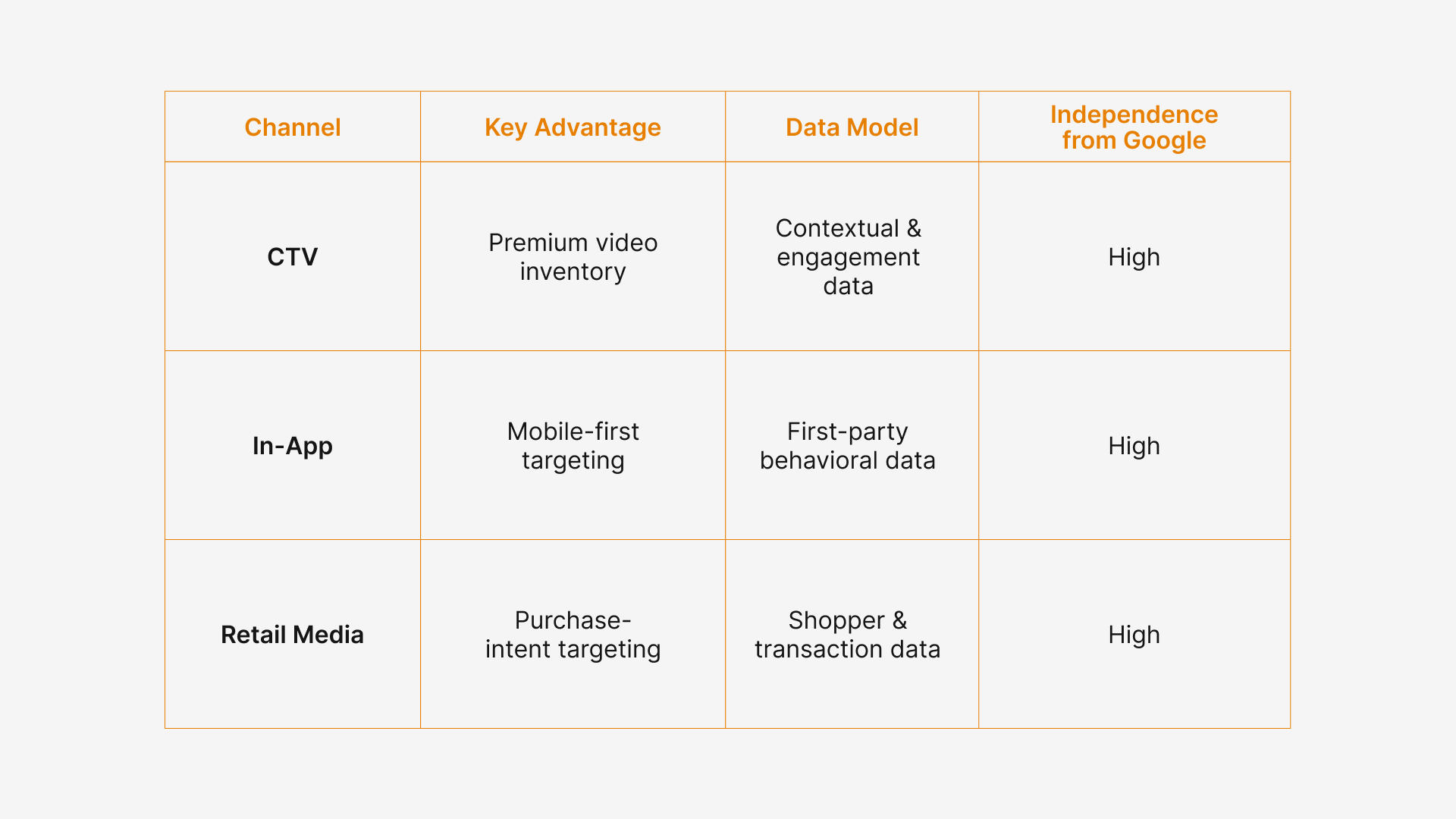
Together, CTV, in-app, and retail media represent a new wave of inventory and data models that operate primarily outside Google’s influence. By diversifying spend across these channels, advertisers can reach new audiences, gain greater control over targeting, and explore innovative creative approaches.
A More Balanced Ecosystem
The AdTech landscape is evolving toward a more balanced and competitive ecosystem. As new channels, independent platforms, and privacy-focused solutions continue to grow, advertisers are no longer limited to a single dominant player. This shift fosters competition, encourages innovation, and drives improvements in transparency, efficiency, and data quality.
Brands are already experiencing significant benefits from this diversification. Greater freedom of choice allows advertisers to tailor strategies to specific objectives, optimize campaigns across multiple channels, and access unique inventory and audience data. Independent platforms and emerging technologies provide innovative tools that support precise targeting, creative experimentation, and privacy-compliant execution.
In the long term, this trend is likely to accelerate, creating a digital advertising environment that values flexibility, accountability, and performance. As the market becomes more diversified, advertisers can make strategic decisions that better align with business goals, resulting in more effective campaigns and greater returns on investment.
The power of programmatic

Floor prices play a far greater role in programmatic performance than many advertisers assume. While brands often focus on audience targeting, frequency, and creative optimization, the minimum price set by the supply-side platform quietly shapes the entire auction environment. A higher or poorly calibrated floor can restrict bid participation, suppress win rates, and limit access to valuable impressions. Conversely, a well-aligned floor price can stimulate competiti

The Scale of the Problem in Modern RTB Bid request failures in real-time bidding are not merely isolated incidents or technical errors, but rather a systemic problem inherent in the functioning of contemporary programmatic advertising. RTB processes enormous volumes of data every second, involving countless auctions, signals, and integrations across the ecosystem. At this scale, even a minor inefficiency can quickly multiply into serious consequences. Missed bids, malformed requests, or slow responses can lead to lost impressions, wasted infrastructure costs, and revenue that never materializes.

The Role of Generative AI in Programmatic Advertising