Why Bid Requests Fail: Hidden Inefficiencies Inside RTB

The Scale of the Problem in Modern RTB
Bid request failures in real-time bidding are not merely isolated incidents or technical errors, but rather a systemic problem inherent in the functioning of contemporary programmatic advertising. RTB processes enormous volumes of data every second, involving countless auctions, signals, and integrations across the ecosystem. At this scale, even a minor inefficiency can quickly multiply into serious consequences. Missed bids, malformed requests, or slow responses can lead to lost impressions, wasted infrastructure costs, and revenue that never materializes.
For advertisers and platforms alike, these failures quietly erode performance and profitability, often without clear visibility into the root cause. The challenge is that many of these issues are normalized as background noise rather than treated as solvable problems. In this article, we take a closer look at the hidden inefficiencies inside RTB and uncover the most common mistakes that lead to bid request failures. Understanding where and why they occur is the first step toward reducing errors and protecting both revenue and margins.
Technical Drop-Offs Before the Auction
Many bid requests fail long before an auction ever begins. These technical drop-offs occur early in the RTB process and go unnoticed, preventing requests from reaching the DSP. From the outside, the auction looks solid, but a significant share of potential demand is filtered out before any bid can be made.
One of the most common causes is malformed or incompatible OpenRTB requests. Even minor deviations from the expected structure can result in immediate rejection. Typical issues include:
- Missing mandatory fields such as device, user, or imp objects.
- Incorrect data types or improperly nested objects.
- Use of outdated OpenRTB specifications that DSPs no longer support.
Timing constraints introduce an additional risk for DSPs, as they must adhere to strict delay thresholds, resulting in the automatic discarding of requests that arrive too late. Network latency, inefficient routing, or overloaded infrastructure can easily push a request beyond acceptable limits.
These problems often intensify due to technical incompatibility among SSPs, Ad Exchanges, and DSPs. Each platform may interpret standards slightly differently, creating subtle mismatches that invisibly block demand. As a result, many bid requests fail without error messages, auctions, or clear indicators of lost opportunity.
Data Quality and Signal Mismatch
Even when a bid request is technically valid, poor data quality can significantly reduce its chances of receiving a bid. RTB decisions rely heavily on signals that help DSPs assess value, relevance, and risk. When signals are weak, conflicting, or unreliable, they may deprioritize the request or ignore it entirely.
One common problem is inaccurate or incomplete device-level data. Mismatched operating systems, missing device identifiers, or unclear connection types make it harder for DSPs to model performance and price impressions accurately. Similar issues arise from weak or inconsistent user identifiers, which limit audience recognition and frequency control.
Data inconsistency throughout the supply chain is also a significant factor:
- Inconsistent use of content and category taxonomies.
- Low-quality or imprecise geolocation data.
- Poor or misleading app and site metadata.
When these signals conflict, DSPs cannot reliably determine context or user intent. To protect performance and avoid wasted spend, platforms often lower bid priority, apply aggressive filtering, or exclude such requests altogether. Over time, this silent rejection reduces overall bid density and demand diversity. The auction technically exists, but without trusted data, meaningful competition never fully materializes.
Policy, Brand Safety, and Supply Filters
Not all bid request failures stem from technical errors or data issues. A significant portion of demand gets filtered out by policy-driven controls that determine the participation rights in the auction. These filters operate upstream of the bidding logic, quietly excluding inventory before evaluating price or relevance.
Brand safety rules serve as powerful gatekeepers, with DSPs enforcing strict controls to prevent unsafe, low-quality, or advertising-centric environments. Automated MFA detection, inventory quality scoring, and seller trust signals further narrow the pool of acceptable supply. Requests that fall outside these thresholds may never reach active bidders.
Compliance mechanisms, such as ads.txt and app ads.txt checks, validate authorized sellers and can automatically block inventory if there are mismatches or outdated files. Regional regulations and platform-specific policies also influence eligibility, often in ways that are not immediately visible to publishers or SSPs.
These protections are important for maintaining trust and performance across the ecosystem. However, when policies are applied inconsistently or configured incorrectly, they can unintentionally amplify inefficiency by excluding legitimate demand and reducing auction competitiveness.
Economic Friction Inside the Auction
Not every failed bid request is due to a technical issue. Many are filtered out due to economic frictions that make an impression unattractive from a supply-and-demand perspective. In these cases, the auction may be reachable, but participation never materializes because the value exchange does not align.
This table summarizes the economic reasons behind bid request failures and reinforces the supply-demand perspective.
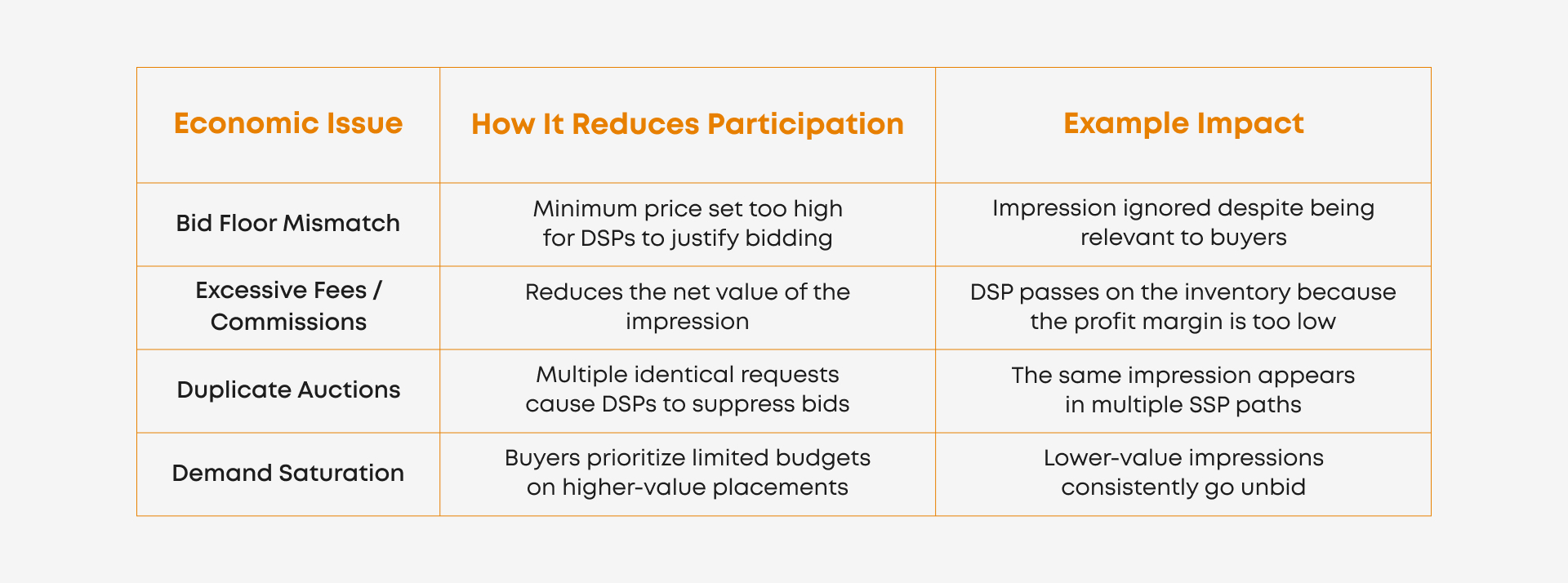
A frequent problem is bid floor mismatch, where minimum prices exceed what demand is willing to pay, leading DSPs to disregard similar impressions to retain efficiency. Excessive fees and layered commissions further distort pricing, reducing net value and making even high-quality inventory uncompetitive.
Market structure influences duplicate auctions, which can result in the same impression being displayed multiple times across various channels, causing DSPs to limit excess opportunities. At the same time, demand saturation forces buyers to prioritize only the most efficient placements, leaving marginal impressions without bids.
These dynamics reflect an imbalance between available supply and realistic demand, not a failure of the auction mechanics themselves. When pricing signals, fees, and exposure frequency are misaligned, DSPs respond rationally by withholding participation. Potentially useful impressions are skipped, preventing meaningful competition.
Reducing Bid Request Waste Across the Ecosystem
Reducing bid request waste requires coordinated effort across the entire RTB ecosystem. Publishers can start by ensuring that all requests are well-formed, complete, and compliant with current OpenRTB specifications. Accurate device signals, consistent metadata, and strong user identifiers increase the likelihood that requests will be accepted and valued by DSPs.
Advertisers and DSPs benefit from more transparent communication and alignment on bid floors and inventory quality. Setting realistic floor prices, avoiding excessive commissions, and minimizing duplicate auctions help ensure that impressions attract genuine competition.
SSPs play a key role by improving transparency and standardization. Sharing accurate supply data, verifying seller trust, and maintaining up-to-date compliance files reduce unnecessary filtering.
By focusing on these improvements, all participants can increase request density, maximize participation, and raise the percentage of winning bids. A more efficient ecosystem not only reduces wasted requests but also strengthens revenue and performance for everyone involved.
The power of programmatic

Metadata is the descriptive information attached to a digital asset, such as a website, mobile app, video, or ad impression. While users never see it directly, it provides critical context about the content, audience, placement, and environment in which an ad may appear. This information helps advertising platforms better understand what a specific impression represents and how valuable it may be to advertisers.

How DSPs Manage and Distribute Campaign Budgets
15 May 2026Budget allocation in a demand-side platform refers to how an advertiser’s budget is distributed throughout the duration of a campaign. Instead of spending too quickly at the start or leaving unused funds at the end, DSPs pace spending to maintain balance over time. This process involves setting daily or hourly limits and continuously adjusting them based on campaign performance and available opportunities.

How Signal Loss Is Reshaping RTB Strategies
10 Apr 2026Signal loss is the gradual reduction of user data that advertising systems rely on. This includes cookies, device identifiers, and other tracking signals used in real-time bidding to understand who the user is and how valuable an impression might be.